Branding is the work of deciding what a business stands for and showing it the same way everywhere people meet it. It covers strategy, identity, voice and the rules that keep them consistent. This guide explains what branding includes, what a branding project should hand over and how to build a brand in six stages. It also covers when to do it yourself, how to choose a branding studio and how to tell if the work is paying off.
What is branding?
Branding is the process of defining what a business stands for and expressing it consistently through its name, look, voice and behaviour. A brand is the result, meaning what people think and feel about the business. Branding is the work a business does to shape that picture.
The word comes from marking livestock so owners could tell their animals apart. The idea is the same today. Branding helps people pick you out and remember what you offer. The difference is that a modern brand is built from many small signals, not one mark.
Those signals fall into four groups:
- Strategy: Who you serve, what you promise and why you are different.
- Identity: The name, logo, colours, type and imagery people see.
- Voice: How you write and speak, from headlines to support emails.
- Behaviour: How the business acts at every touchpoint, from delivery times to how complaints are handled.
Branding, marketing, identity and image
Branding, marketing, brand identity and brand image are related but answer different questions.
Branding sets who the business is. Marketing uses that to reach people and drive action. Brand identity is the visible and verbal kit the business designs. Brand image is what people actually think, which the business can influence but not control.
| Term | What it is | Who controls it | Timeframe | Question it answers |
|---|---|---|---|---|
| Branding | The work of defining and expressing the brand | The business | Rarely, reviewed every year or two | Who are we and why should anyone care? |
| Marketing | Campaigns and channels that reach and convert people | The business | Often, by campaign or quarter | How do we reach people this quarter? |
| Brand identity | Name, logo, colour, type, imagery, voice | The business | Rarely, with a refresh or rebrand | What do people see and hear? |
| Brand image | What people believe and feel about the business | Customers and the market | Slowly, through experience | What do people think of us? |
If your team mixes these up, briefs get vague. A request for "new branding" often means a new logo, when the real gap is strategy or consistent use. For a full breakdown of the visual and verbal parts, see our guide to the components of brand identity.
Why branding matters
Branding matters because it turns a business that people have to work out into one they can recognise and trust quickly.
The benefits show up in everyday work, not only in big campaigns:
- Recognition: People spot your posts, ads and packaging before they read the name.
- Differentiation: A clear position gives buyers a reason to choose you over a similar offer.
- Trust: A business that looks and sounds the same everywhere feels organised and reliable.
- Easier marketing decisions: Designers, writers and agencies can check work against agreed rules instead of debating taste.
- Consistency across teams: New staff learn what the business stands for, and sales, support and marketing describe it the same way.
The common symptom of weak branding is inconsistency. The website says one thing, the sales deck another and social posts a third. A new logo does not fix this on its own. If nobody agreed what the brand stands for, every new asset drifts again.
Get the branding brief worksheet
Enter your details and we will send the Excel worksheet to your inbox.
Types of branding
Most branding projects fall into one of a few types, and knowing yours helps you scope the work.
- Corporate branding: The brand of the company as a whole, used across every product and service.
- Product branding: A name and identity for a single product or product line within a company.
- Service branding: Branding for a business that sells expertise or time, where people and process carry the brand.
- Personal branding: A founder, consultant or creator building a brand around their own name.
- Employer branding: How the business presents itself to current and future staff.
- Co-branding: Two brands working together on a product, event or campaign.
A small service business usually needs corporate branding first. Product and co-branding decisions come later and follow the rules the corporate brand sets.
What a branding project delivers
A branding project should hand over decisions, design files and rules, not only a logo.
Use this list to brief a studio or to check a proposal. Not every business needs every item, but each group should be covered in some form.
The old way of handing over a PDF and a logo file leaves teams guessing. Ask for working templates in the tools your team already uses, so the brand gets applied correctly from day one.
How to build a brand, step by step
Building a brand works best in six stages, and each stage should produce a clear output before the next one starts.
Decide
Agree strategy, positioning, personality and voice.
Design
Create the name if needed and the visual identity, then test it on real touchpoints.
Use
Write the guidelines, roll out and review regularly.
Stage 1: Research the market and your audience
Start with what is true today, not what you hope the brand will be. Talk to five to ten customers about why they chose you and what nearly stopped them. Review how competitors describe themselves and where they all sound the same. Then run an audit of current touchpoints. Collect everything you own, from the website to invoices, and look at the pieces side by side.
- Output: A short research summary with customer words, competitor patterns and a list of touchpoints that need work.
Stage 2: Define strategy and positioning
Strategy turns research into decisions. Write down why the business exists, your mission and values, who it is for, what it promises and why someone should believe that promise. Positioning says how you are different from the alternatives your customers consider, and a positioning statement puts that into one or two sentences.
- Output: A one or two page brand strategy with purpose, audience, positioning, value proposition and three to five values.
Stage 3: Set personality, voice, messaging and name
Brand personality describes how the brand would behave if it were a person. Voice turns that into writing rules. Key messages are the few things every page, pitch and post should support. If you need a new name, this is where naming happens, before any logo work.
- Output: Personality traits, tone of voice rules with examples, three to five key messages, a short brand story and, if needed, a checked name.
- Trademark and domain check: Search the matching domain and social handles, and search trade mark registers such as IP Australia's trade mark search before the team falls in love with an option.
Stage 4: Design the visual identity
Brand design comes after strategy because every choice should have a reason. The logo, colour palette, typography and imagery style should express the personality and stand apart from competitors. Test on real touchpoints such as a homepage, a social post and a business card, not only on a white page.
- Output: Final logo set, colour palette with codes, type system, imagery and icon style, and mock-ups on real touchpoints.
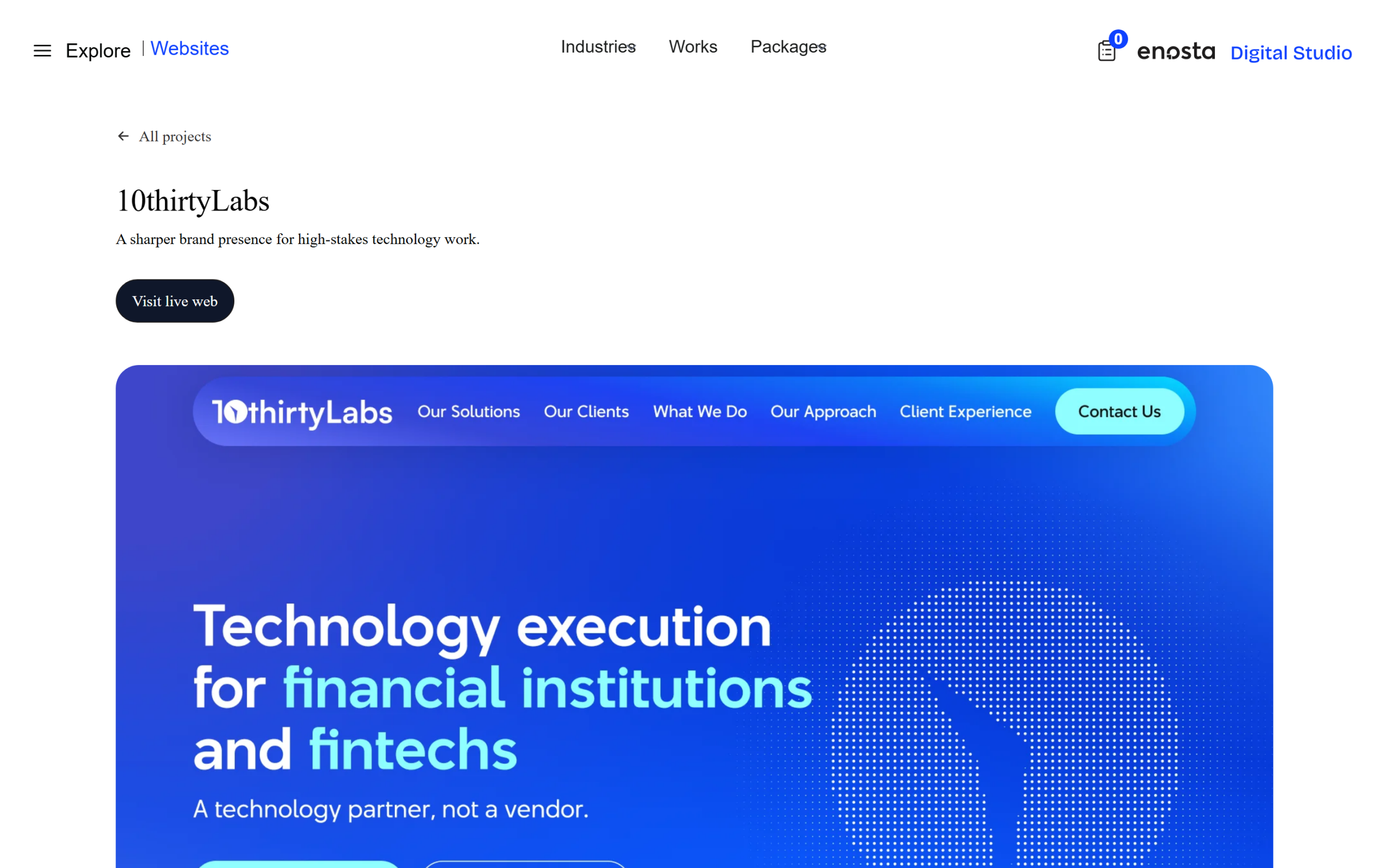
Our team at Enosta Digital Studio has delivered brand identity work for clients such as 10thirtyLabs, a Singapore technology advisory, and Experior, an Australian conversion optimisation consultancy, where the identity was carried through to the website.
Stage 5: Write guidelines and roll out
Guidelines make the brand usable by people who were not in the project. Keep them short enough to read and specific enough to follow. Then roll the brand out in order of impact: website first, then sales materials, social profiles, email and signage or packaging.
- Output: Brand guidelines, templates in your everyday tools and a rollout list with owners and dates.
- Website: Update the homepage, service pages and metadata so search results match the new positioning.
- Social media and sales: Refresh profile images, bios, pitch decks and proposals in the same week, so people do not see two brands at once.
Stage 6: Manage and review
A brand drifts unless someone owns it. Name one person who approves new templates and answers "is this on brand?" questions. Set a review cycle. Check the brand once a year, or when the business changes its offer, market or audience.
- Output: A brand owner, a simple approval process and a yearly review date.
Do it yourself or work with a studio?
Doing it yourself suits small, low-risk projects, while a studio suits work where research, design and rollout all need to fit together.
| Factor | Do it yourself | Work with a studio |
|---|---|---|
| Best for | Early-stage businesses testing an idea | Growing businesses, repositioning or a launch |
| Time | Founder or marketer time, often spread over months | A planned project with set stages and dates |
| Skills needed | Strategy, writing and design in house | Provided by the studio team |
| Research | Usually informal | Customer interviews and competitor review built in |
| Main risk | A look with no strategy behind it | Paying for scope you do not need |
A common path is to start with a simple DIY kit, then bring in a studio when the business grows or the brand starts to hold it back. If you go DIY, still follow the six stages. Skipping strategy is the most expensive shortcut, because it shows up later as rework.
How to choose a branding studio
The right branding studio shows relevant work, starts with strategy and is clear about what you will own at the end.
Use these criteria to compare options:
- Relevant work: Look for projects in your sector or at your size, with the full identity shown, not only logos.
- Strategy first: The proposal should include research and positioning before design starts.
- Named deliverables: Every item from the deliverables list should be written into the proposal.
- Feedback rounds: The number of review rounds at each stage should be stated.
- Ownership: You should own the final files, and font and image licences should be explained.
- Team: Ask who will do the work and who you will speak to each week.
- Rollout support: Check whether templates and website direction are included or extra.
Ask these questions in the first call:
- What do you need from us before the project starts?
- How do you research our customers and competitors?
- How many logo routes will we see, and how many rounds of changes are included?
- What files and templates do we receive at the end?
- Who owns the work and the source files?
- Can you help apply the brand to our website?
Watch for red flags such as a fixed logo price with no strategy step, no examples of full identity systems, or vague answers about file ownership.
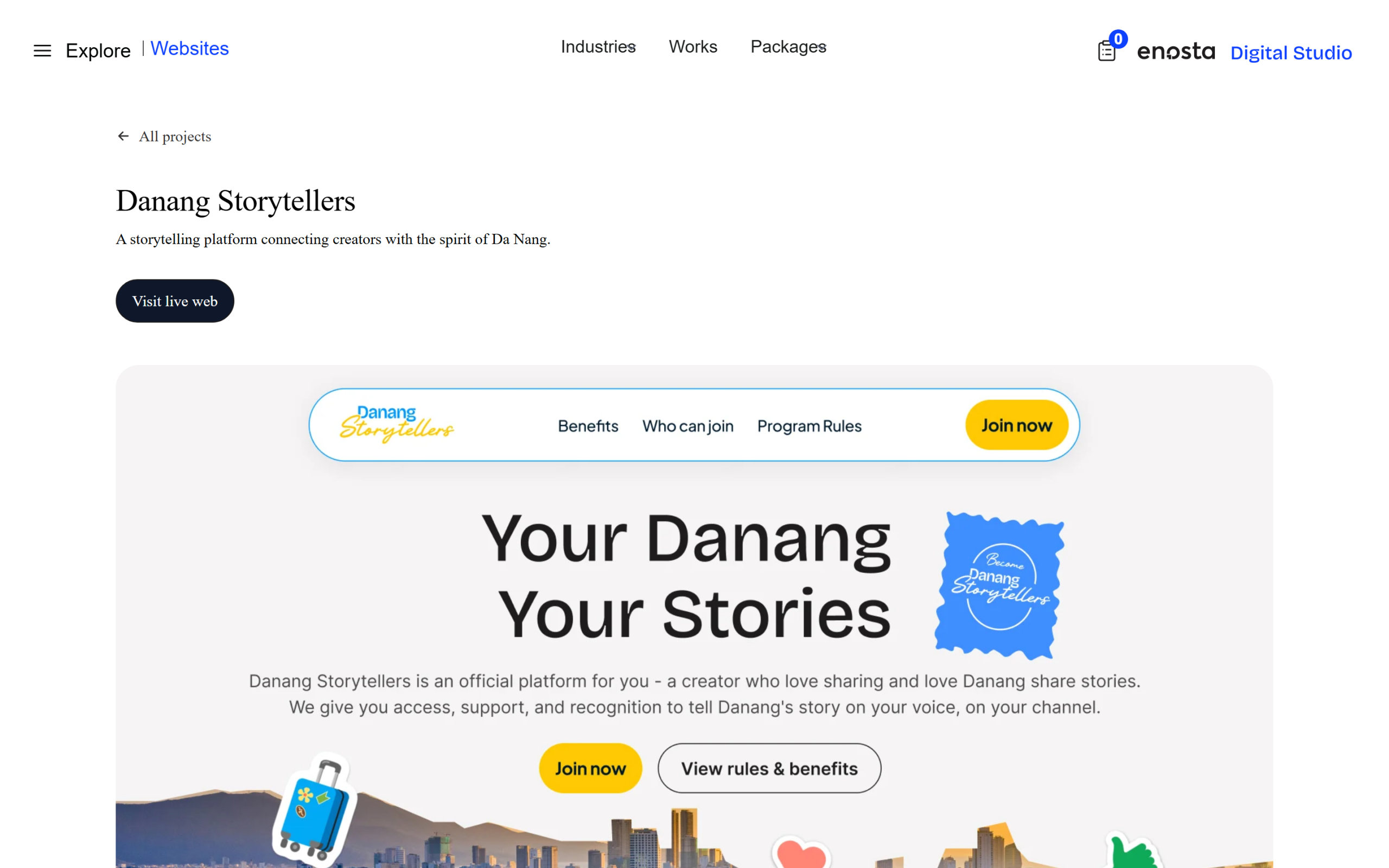
Our portfolio includes brand identity projects for businesses such as Danang Storytellers, a city platform for creators, and Emic Hospitality in Hoi An. Brand and visual identity is part of our Design service, which covers strategy, identity and the guidelines your team needs to apply it.
What affects the cost of branding
Branding quotes vary because the scope behind them varies, so compare what is included, not only the total.
These factors move the price most:
- Research depth: Customer interviews and competitor audits take time, but they are what make the strategy reliable.
- Strategy work: Workshops, positioning and messaging add cost compared with design-only quotes.
- Naming: Creating and checking a new name is a separate piece of work.
- Number of deliverables: More logo versions, templates and guideline pages add design time.
- Rounds of changes: Each extra review round adds time at that stage.
- Rollout assets: Social templates, decks, signage and website direction can double the scope.
- Team and location: Senior teams and some markets cost more per hour.
When two quotes look very different, line them up against the deliverables list above. The cheaper quote often leaves out research, guidelines or templates.
How to tell if your branding works
You can tell if branding works by tracking whether more people recognise, search for and describe the business the way you intended.
A small team can track these signals without a research budget:
- Branded search: Watch searches for your business name in Google Search Console, month by month.
- Direct traffic and returns: More people typing your address or coming back is a sign of recall.
- How people describe you: Note the words customers use in reviews, sales calls and emails, and compare them with your key messages.
- Recommendation score: A simple Net Promoter Score survey asks how likely customers are to recommend you, from 0 to 10.
- Consistency checks: Twice a year, put your website, social posts, decks and documents side by side and mark anything off brand.
Give the brand time. Recognition builds over months of consistent use, so judge trends rather than week-to-week changes.
Tools for small teams
A few everyday tools help small teams apply the brand correctly without a designer on every task.
Canva Brand Kit
Canva lets a team save logos, colours and fonts in a Brand Kit, so new designs start from approved elements. On 18 November 2026, Canva's pricing page listed one Brand Kit on the Free plan, Canva Pro at US$144 per year for one person, and Canva Business at US$250 per year per person. It suits teams making social posts, presentations and documents.
Adobe Express
Adobe Express covers templates for social, video and print. The Adobe Express pricing page lists a free plan and Premium at US$9.99 per month with brand kits included. Teams costs US$7.99 per licence per month after any first-year discount, with a two-seat minimum, and adds template locking.
Figma
Figma is where many designers build the identity and the design system that follows. Shared libraries let one person publish colours, type styles and components for the whole team. Figma's pricing lists a free Starter plan and Professional at US$16 per full seat per month, which adds team-wide design libraries.
Google Fonts
Google Fonts offers a large library of fonts that are free to use in print and on websites. Choosing your brand typefaces from it removes most licence questions for small teams and keeps the website fast to set up.
Prices were checked on 19 November 2026 unless stated and can change, so confirm on each pricing page before you buy.
Frequently asked questions
How long does branding take?
A focused branding project for a small business often takes six to twelve weeks from research to guidelines. Naming, extra research or a large rollout can add more time. A DIY brand can be faster, but it usually needs revisiting once the business grows.
Can a small business do branding on a small budget?
Yes. Start with a one-page strategy, a simple logo, two colours and two fonts, then write a one-page guide. Use free tools to apply it. Spend on professional help first where the stakes are highest, usually the logo and the website.
When should a business rebrand?
Consider a rebrand when the business changes what it sells, who it sells to or where it sells, or when the current brand causes confusion. A refresh of the visual identity is enough when the strategy still fits but the look feels dated.
Who owns the brand files after a project?
The business should own the final logo, artwork and guidelines once the project is paid for. Confirm this in the contract, and check font and image licences separately, because those belong to their makers and come with their own terms.