A social media strategy is a short written set of decisions about your goals, audience, platforms, content and measures. It lets a small team say yes or no to a post, a platform or a request without guessing. This guide explains what goes into a social media marketing strategy and how it differs from a calendar, daily management and ads. It then walks through seven stages, a one-page template and a worked example, so you finish with a plan your team can use.
What is a social media strategy?
A social media strategy is a short written plan with five decisions. It sets what you want from social media, who you are talking to, which platforms you will use, what you will post and which measures show progress. It changes slowly, and it deliberately leaves scheduling, daily replies and paid ads to other documents.
Think of it as the rulebook behind every post. When someone suggests a new platform or a trending format, the strategy gives you something to check it against. If the idea does not serve the goal and the audience, you can drop it without an argument.
Strategy vs calendar, management and ads
A strategy decides what and why, while a calendar, daily management and ads handle when, how and how far.
These four things are often mixed up, and that is why many small teams post a lot without a clear aim.
| Strategy | Content calendar | Social media management | Paid social | |
|---|---|---|---|---|
| What it decides | Goals, audience, platforms, pillars, measures | What goes out on which day | Posting, replies and routine reports | Paid reach for chosen posts |
| How often it changes | Reviewed each quarter | Weekly or monthly | Daily | Per campaign |
| Who owns each | Owner or marketing lead | Whoever creates content | Whoever runs the accounts | Whoever sets the budget |
This guide covers only the first column. Building a calendar, running accounts day to day and buying ads are separate jobs, each with its own skills.
Why a small business needs one
A small business needs a written strategy when more than one person posts, time is short or nobody can say whether posting is working.
Look for these signs:
- Posting without a goal: Posts go out every week, but nobody can say what they are for.
- Too many platforms: Accounts exist on five platforms, and three of them have gone quiet.
- Several voices: Each person writes in a different tone, so the business sounds inconsistent.
- Reports that do not connect: Likes and followers rise, but enquiries and bookings stay flat.
A strategy fixes these by creating alignment between the people who post and putting the choices in one place. It gives you focus, and it makes saying no easier. Half a page is enough to start, and you can add detail after the first review.

Get the one-page social media strategy template
Enter your details and we will send the Excel template to your inbox.
How to build a social media strategy
You can build a social media strategy in seven stages, and each stage produces one short answer for your page.
Aim
Set goals and describe the audience you want to reach.
Choose
Pick two or three platforms and three to five content pillars.
Run
Decide your measures, review rhythm and who does what.
Stage 1: Set goals tied to business results
Start with the business objectives, then work back to social media. A goal such as "more bookings from people who find us on Instagram" is useful. Likes and follower counts are not goals, because followers do not pay invoices.
- Awareness: More of the right people know the business exists.
- Enquiries or bookings: People contact the business or book after seeing posts.
- Community: Customers talk to the business and to each other.
Pick one main goal and at most one supporting goal. Goals also sit at different points of the buying journey, which our guide to full-funnel marketing explains.
Stage 2: Describe your audience
Write a short audience profile covering who they are, what they ask before they buy and where they already spend time. You do not need a large budget for this.
- Customer questions: Ask five or so recent customers how they found you and what nearly stopped them.
- Enquiries and comments: Collect the questions people already send you.
- Platform analytics: Check the age, location and activity of your current followers.
The questions you collect here become the raw material for your content pillars in Stage 5.
Stage 3: Audit what you already have
A social media audit records where you stand today, so later results have a baseline. List every account the business owns, including quiet ones, and note what each is used for.
- Per account: Profile and bio, last post date, what gets the most response and who manages it.
- Competitor review: Review three to five similar businesses, and note what they post and what draws replies.
- Baseline: Write down current reach, enquiries from social media and followers, so you can compare later.
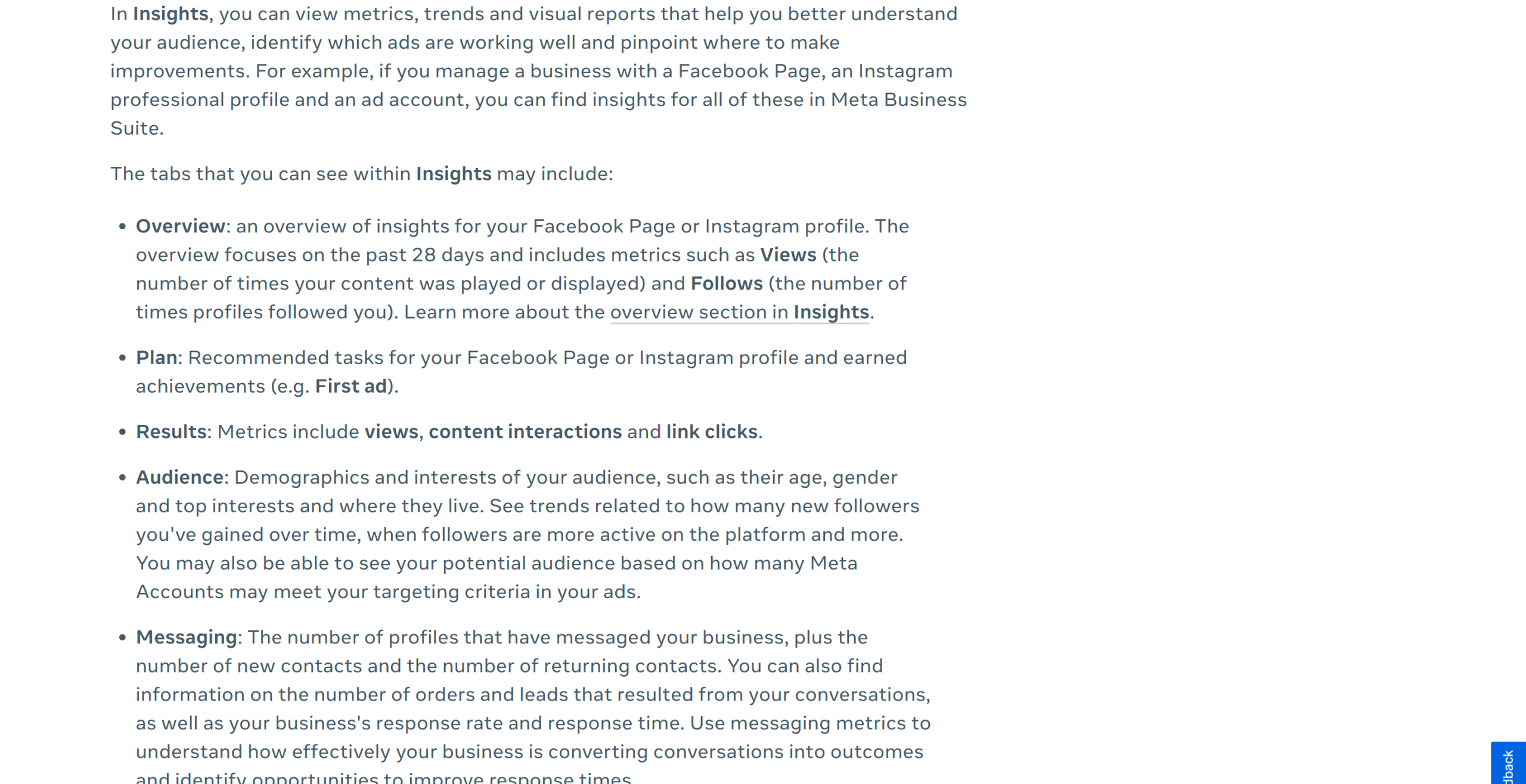
Meta's Insights includes a benchmarking tab that compares your business with others in the same category. Treat it as one input, not a target.
Stage 4: Choose two or three platforms
Choose platforms by three criteria. Where is your audience already, which formats can your team produce well, and how many hours can you give each week? Most small teams do better with two or three platforms than with five.
- Audience: Go where your Stage 2 profile already spends time.
- Formats: Match the platform to the formats the team can produce, such as photos for Instagram, short video for TikTok or YouTube, or written posts for LinkedIn and Facebook.
- Time: Drop a platform if you cannot keep it active for months.
Instagram is a useful worked case. Switch to a professional account, write a clear profile and bio, keep one consistent look and repeat one short key message. Then post steadily and give it time. Other platforms need the same checks, and a platform that fails them is a platform to skip.
Stage 5: Pick three to five content pillars
Content pillars are the repeating topics your posts cover. Draw them from the audience questions in Stage 2, then check each against your goal. A pillar that answers a real question and supports the goal stays.
Explain
Answer cost, process and “how do I” questions.
Show
Behind the scenes, work in progress and results you can show.
Prove
Reviews, before and after, and customer stories.
Add a tone of voice and one key message, so every pillar sounds like the same business. The calendar that schedules these pillars is a separate step, and this guide does not build one.
Stage 6: Decide how you will measure
Measurement starts by matching each goal to a measure you can actually find, with today's figure as the baseline. Then set a monthly check and a quarterly review.
| Goal | What to measure | Example measure |
|---|---|---|
| Awareness | Reach and views | People reached by posts each month |
| Enquiries | Contact from social media | Messages, calls or form fills that mention social media |
| Bookings | Bookings that began on social media | Bookings where the customer says they came from a post |
| Community | Conversation | Replies and saves on your pillar posts |
Platforms show these in their own tools. Instagram's professional dashboard gives a summary of your last 30 days and a link to more detailed metrics. Reach and engagement rates are not comparable across platforms, so compare each platform with its own past.
Stage 7: Agree who does what
Name one owner for the strategy and one person for each task. In a small team these can be the same person, but each task still needs a name.
- Owner: Keeps the strategy current and runs the review.
- Poster: Creates and publishes the content.
- Approver: Checks posts against the strategy before they go out.
- Replier: Answers comments and messages, within a time the team agrees.
If your team does not have time to run all of this, strategy, content and reporting can sit with one team. Enosta Digital Studio does this through its Marketing & Creative service.
A one-page social media strategy template
A one-page template holds every decision from the seven stages in short fields your team can read in a minute.
The example below is hypothetical. It shows a neighbourhood bakery with two staff, and it makes no claim about results.
| Field | Hypothetical example |
|---|---|
| Goal | More weekend pre-orders from people who live nearby |
| Audience | Local families and office workers who ask about ingredients, pickup times and custom cakes |
| Baseline | Current monthly reach, pre-orders that mention social media, followers on each account |
| Platforms | Instagram for photos and short video, Facebook for local groups and event notes |
| Content pillars | Behind the counter, cake and order questions answered, local events |
| Voice and key message | Warm and plain: "Fresh, local and ready when you are" |
| Measures | Reach each month, pre-order messages, bookings that mention a post |
| Review | Monthly check by the owner, quarterly review with the team |
| Roles | Owner approves, one staff member posts, both reply within one working day |
| What we will not do | Open a TikTok account or post daily this quarter |
The last row matters most. Writing down what you will not do is how a small team protects its time.
Mistakes that make strategies fail
Most strategies fail because they are too broad, left unmeasured or not opened again.
- Too many platforms: Five accounts cannot be kept active by a small team. Cut to two or three.
- Follower-count goals: Followers are not results. Tie goals to enquiries or bookings.
- No baseline: Without today's figures, you cannot say whether anything changed.
- No review: A strategy that is not reviewed stops matching the business. Put the review dates in the diary.
- Copying big brands: Tactics built for a large budget rarely fit a small team. Copy the decisions, not the tricks.
- Several voices: Write the tone and key message down, and share them with everyone who posts.
If you are unsure whether your channels match the strategy, an outside review can spot gaps before you spend more time.
Frequently asked questions
How often should a social media strategy be reviewed?
Check progress each month and review the strategy itself each quarter. Change it sooner if the business changes its offer, audience or team size.
How often should a small business post?
Post as often as your team can keep up for many months. A steady rhythm on two platforms beats a burst of daily posts that stops after a few weeks. Write the rhythm into the strategy and the calendar.
Do we need a budget for paid ads in the strategy?
Not to start. A strategy works with organic posting alone. If you add ads later, treat them as a separate channel decision with their own goal and budget.
Can AI tools help write a social media strategy?
Yes, for drafts of audience questions, pillar ideas and post wording. People still need to supply the business facts, choose the goals and approve what goes out, because a tool cannot know your customers.