Digital marketing promotes a business through online channels such as search, social media, email and websites. You measure results as the work runs. For most small businesses, start with one goal and one or two channels.
Choosing from the nine channels means understanding how they work together and how to measure them. A four-stage plan helps you begin, with Australian rules guiding your use of email and SMS.
What is digital marketing?
Digital marketing promotes a business, product or service through search engines, social media, email, websites and paid ads. Data measures the results, and each visit, click and enquiry can be tracked.
This measurability sets it apart from traditional marketing. Online marketing and internet marketing describe much the same thing.
Digital, online and internet marketing
The three terms overlap, and people generally use them to mean the same thing.
Internet marketing and online marketing both point to promotion that happens on the web, such as a search ad, a social post or a newsletter. Digital marketing also reaches people without a web page, through SMS, in-app messages and digital screens in a shopping centre.
For a small business, the label rarely changes what you do.
Why your website is the centre
Build your digital marketing plan around your website, where people can take the next step.
Search results, social posts, ads and emails mostly lead to one of three places: Your site, a form or a phone number. Enquiries and sales happen there, and tracking shows which channel brought the visitor.
Even a strong channel wastes money if it sends people to a slow or confusing page. A clear page with one next step improves results from every channel.
A channel is the approach, such as social media or email, while a platform is the tool, such as Instagram.
Digital vs traditional marketing
Digital marketing differs from traditional marketing, such as print, TV, radio and outdoor advertising, mainly in targeting, measurement and how fast you can change a campaign.
| Digital marketing | Traditional marketing | |
|---|---|---|
| Targeting | Can be narrowed by search terms, location, interests or past visits | Reaches whoever sees the print, sign or broadcast in an area |
| Measurement | Clicks, visits, enquiries and sales can be tracked by channel | Harder to link to sales, so it often relies on surveys, codes or call counts |
| Cost to start | Small test budgets are possible, and you can pause at any time | Print runs, airtime and signage usually need a larger upfront commitment |
| Speed to change | An ad or message can be edited the same day | A printed or broadcast piece is fixed once it runs |
| Best for | Reaching people who are searching or online, and learning what works | Local presence, familiarity and audiences who are mostly offline |
Neither replaces the other, so choose the mix that best fits your customers.
When traditional marketing still makes sense
Traditional marketing still earns its place in three common situations, reaching customers who are local, offline or slow to change habits:
- Local trades and services: A van sign, a shopfront or a letterbox drop reaches households in the suburbs you serve, including people who do not search for your service.
- Older or offline audiences: Some customers read the local paper, listen to the radio or rely on word of mouth, and may not meet your ads online.
- Trust and familiarity: A visible sign gives a business a physical presence.
Measurement is harder: You can count the flyers you print, but not how many people read them.
Combining both
The simplest way to combine them is to give every printed or outdoor piece a way to be tracked online.
Put a QR code on a flyer, sign or shop window that opens a page made for that piece. Add UTM tags to the link so Google Analytics 4 can show the visits. A hypothetical Geelong landscaper could print a flyer for a letterbox drop with a QR code that opens the garden redesign page:
https://yourbusiness.com.au/garden-redesign?utm_source=letterbox&utm_medium=qr&utm_campaign=geelong-flyer-2026-12The address above is a placeholder. Visits through that link count as coming from the flyer, so the owner can compare it with search and social. A dedicated phone number or offer code does the same job for calls.
How digital marketing works
Digital marketing works by matching channels to the stages a customer passes through before and after buying.
Decision
A clear offer, a fast page and an easy form turn interest into action.
Retention
Email, SMS and good service bring customers back and prompt referrals.
Every stage leads back to your website, so tracking there shows which channel sent each visit. Our guide to full-funnel marketing covers the stages in depth.
B2B and B2C businesses follow the same stages at different speeds. A purchase between businesses often involves a team of buyers and takes longer to decide. Consumer purchases are usually quicker, so the stages overlap.
If your marketing feels scattered, tie each channel to one stage to cut wasted effort.
A customer journey, step by step
In this hypothetical example, a four-person landscaping business in Geelong wants more garden redesign enquiries. It is not a real client, and no results are claimed.
Awareness. Priya, a homeowner in Newtown, is tired of a bare backyard. She searches for "garden redesign Geelong" and sees the business in the map results and a paid ad. She also sees a short before-and-after video from the business in her social feed.
The channels at work are local search, paid search and organic social. The content is a Business Profile with photos, an ad that names the service and suburb, and the video. The owner measures profile views, ad impressions and video views.
Consideration. Priya clicks through to a garden redesign page, looks at past projects and checks the reviews on the profile. The next morning she reads a guide on the same site about choosing plants for a coastal wind.
The channels are SEO, content marketing and reviews, using a service page, a project gallery and one helpful guide. The owner measures visits to the page, time spent on key pages and where visitors came from.
Decision. Priya fills in a short quote form that asks for her suburb, the size of the yard and a phone number. The business replies the same day.
The website is the channel, supported by a prompt reply to the enquiry. Its content includes a clear offer, a form with few fields and a confirmation message. The owner measures form submissions, calls and the conversion rate from visit to enquiry.
Retention. After the job, Priya receives a thank-you email, a request for a review and, in autumn, a reminder about seasonal garden care. She has agreed to receive these, as the Australian rules require.
The channels are email, SMS and the Business Profile, using a review request and a short seasonal tip. The owner measures reviews received, email clicks and repeat bookings.
The channels worked together, although your own customer journey will differ from this example. List the stages, name the channel for each one and decide in advance what you will count.
From our work
Results from real campaigns depend on the channel and goal, with the same customer stages at work.
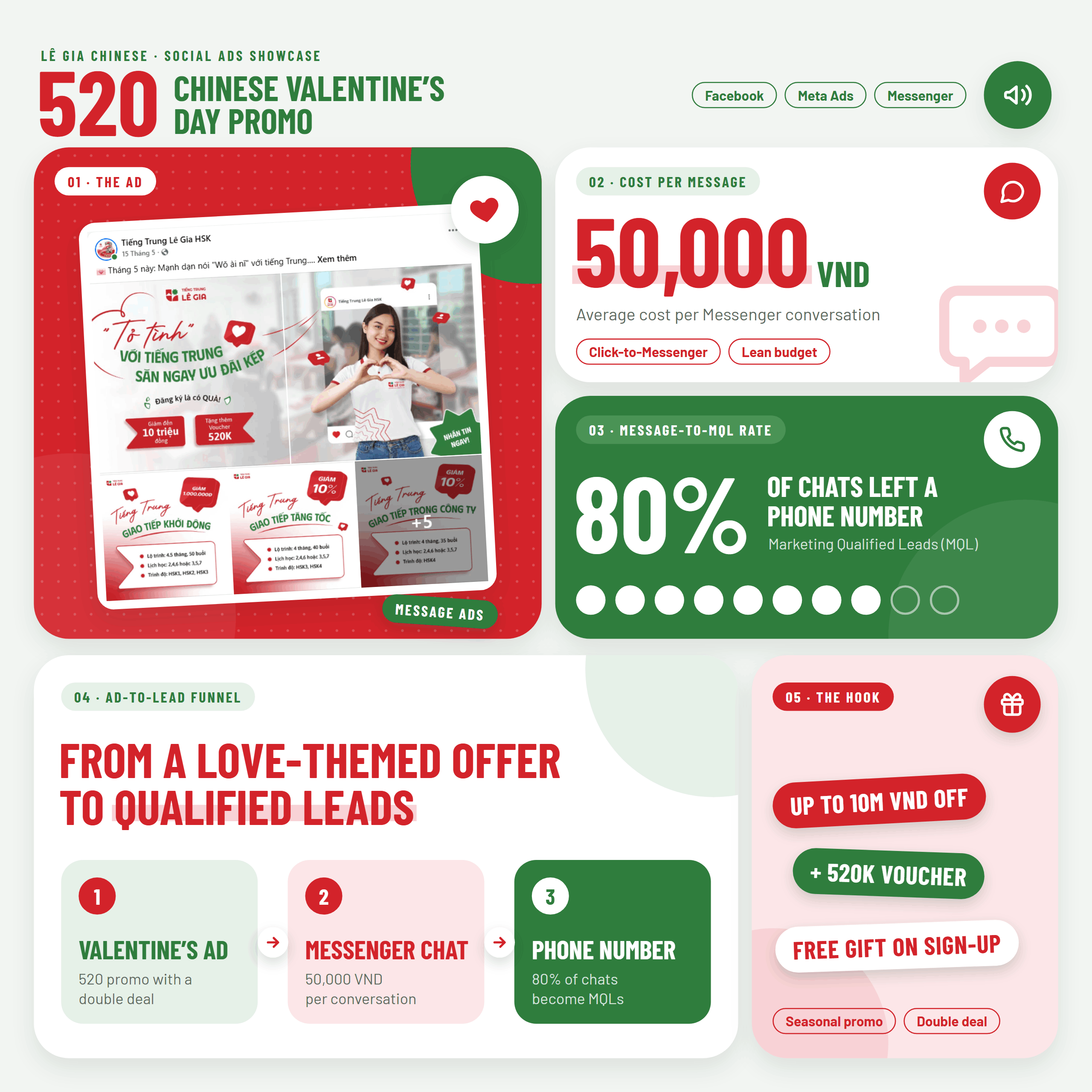
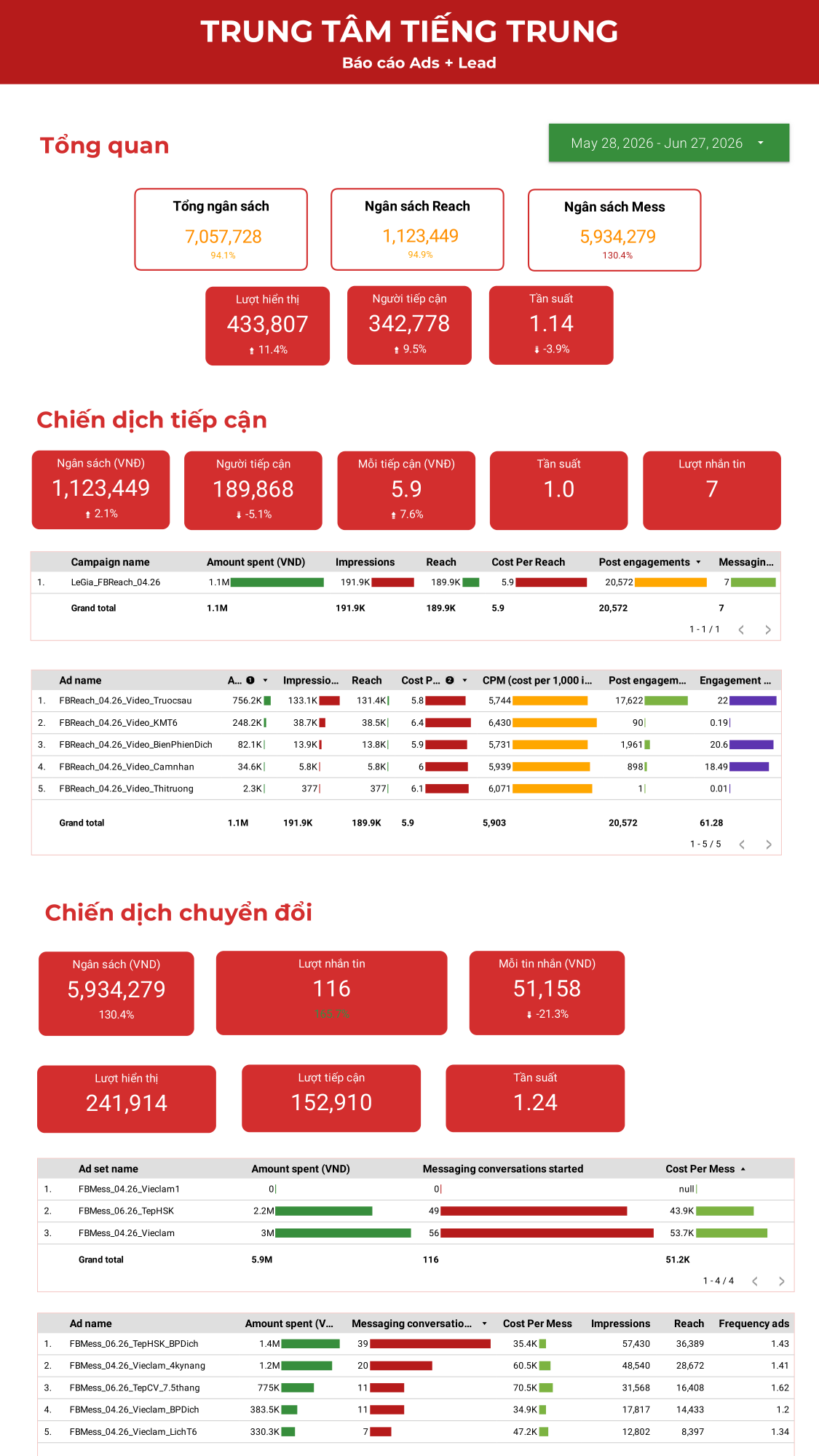
Our social media marketing case study for education reports two examples. For a Chinese language centre in Bac Ninh, reach rose 42%, engagement rose 32.4%, inbox messages rose 150% and 80% of leads were qualified.
For an event campaign supporting HKU MBA recruitment, the figures were 452,584 impressions and 7,571 link clicks. These results apply to those clients and campaigns; they are not a benchmark for other businesses.
The campaign image comes from the same case study.

Types of digital marketing
Nine channels cover most digital marketing, and each one does a different job.
Costs are described in general terms because prices change often.
Search engine optimisation (SEO)
SEO makes your site easier for search engines to understand and for people to find in unpaid results. It covers content, page structure, technical health and the links other sites give you.
- Suits: Businesses whose customers already search for what they sell, and who can wait for gradual results.
- How to start: (1) Add your site to Google Search Console. (2) List the searches your customers use and give each one a single page. (3) Fix page titles, headings and speed on your key pages. (4) Improve or publish one page a month and keep it current.
- Cost: There is no charge per click. You pay through staff time or specialist fees.
- Tools: Google Search Console, Google Analytics 4 and Google Business Profile for local search.
- Measure: Organic visits, search clicks and the enquiries those visits produce.
- Go deeper: Our guide to what is SEO explains each part, and the Marketing & Creative services hub shows how we support search growth.
AI search offers a second way for people to find you through tools such as AI Overviews. These tools summarise answers from web pages, so clear, well-sourced pages matter. Our AI Overviews guide explains how to prepare, and Google's SEO starter guide covers the basics.
Content marketing
Content marketing is publishing useful material, such as guides, videos and case studies, that answers customer questions before they buy.
Search brings people to your content, social shares it and email follows up.
- Suits: Businesses where buying is a considered decision and customers research first.
- How to start: (1) Write down the ten questions customers ask most on calls and quotes. (2) Answer each in one page, with a real example or photo. (3) Link each page to the next step, such as a form. (4) Share it by email and social, then update it after six months.
- Cost: Mostly time, or the fees of a writer, photographer or designer. There is no media spend unless you promote the piece.
- Tools: Google Search Console to see the searches that reach a page, Google Analytics 4 for visits, and a design tool such as Canva for images.
- Measure: Visits to key pages, and how many readers go on to an enquiry.
- Go deeper: Our Design services cover creative production.
Social media marketing
Social media marketing builds an audience and relationships through regular posts, video and replies. Platforms include Facebook, Instagram, LinkedIn and TikTok.

- Suits: Businesses whose customers spend time on a platform and who can post consistently.
- How to start: (1) Choose one platform where your customers already are. (2) Set a realistic schedule, such as two or three posts a week. (3) Mix proof, such as projects and reviews, with useful tips and a clear call to action. (4) Answer every comment and message within a working day.
- Cost: Time for planning, filming and replying. Paid promotion is a separate choice, covered under paid social.
- Tools: Meta Business Suite for Facebook and Instagram, the native tools on each platform, and a scheduling tool if you post often.
- Measure: Reach and engagement, and above all the visits and enquiries that come from social.
- Go deeper: Our social media marketing strategy guide shows how to plan it.
Paid search
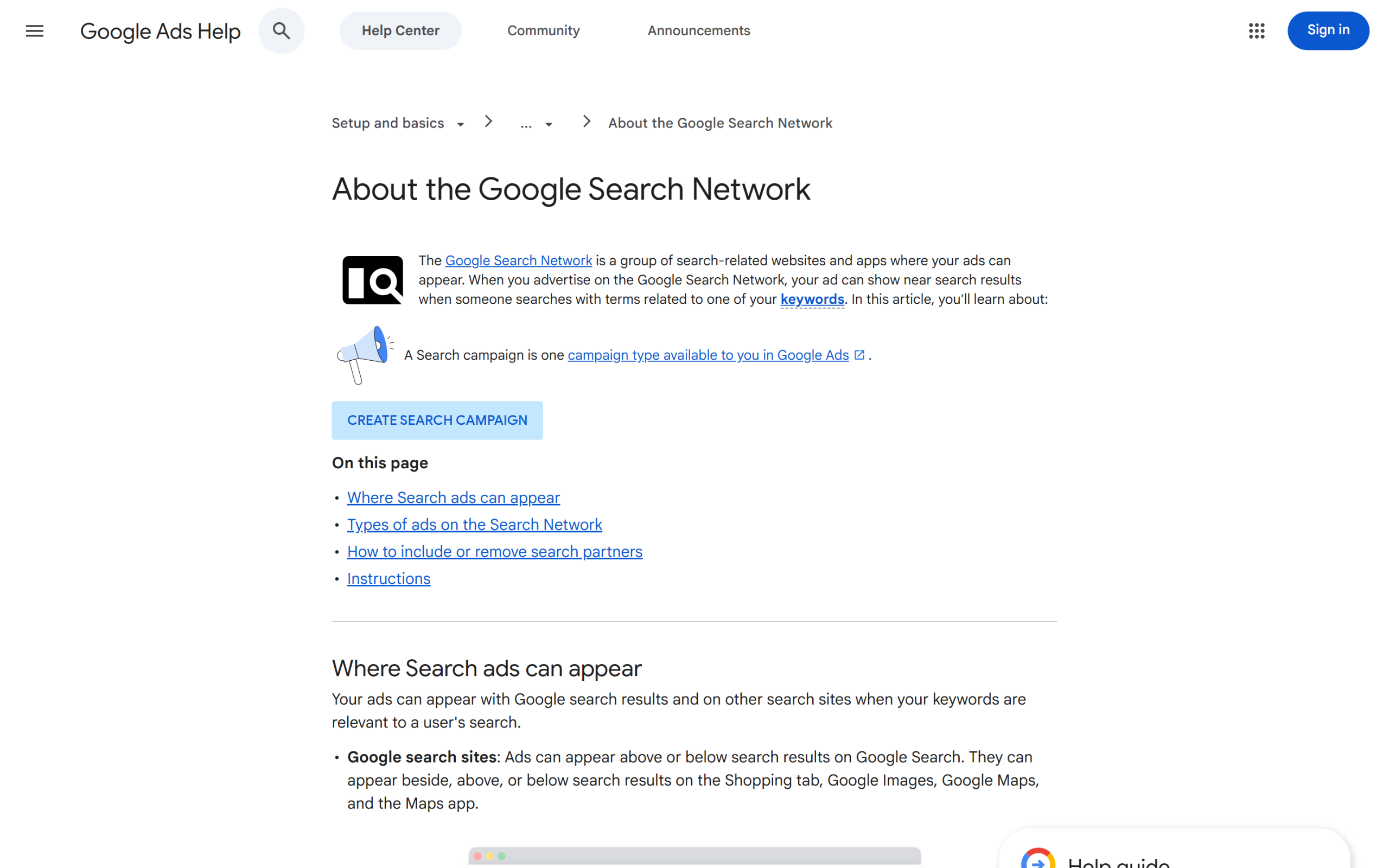
Paid search places your ad with search results for chosen keywords, and you usually pay when someone clicks. Google Ads is one tool for running it on Google.
- Suits: Businesses whose customers are searching now and who have a page ready to turn a visit into an enquiry.
- How to start: (1) Pick one service and the page that sells it. (2) Choose 10 to 20 keywords that show buying intent, and add negative keywords to block irrelevant searches. (3) Set a daily budget and limit the ads to the suburbs you serve. (4) Write ads that match the page, and track form submissions and calls as conversions.
- Cost: You set the budget, and most campaigns charge by click. The price per click varies with competition for the keyword.
- Tools: Google Ads for the campaign and Google Analytics 4 to see what visitors do afterwards.
- Measure: Cost per click, conversion rate and cost per acquisition.
- Go deeper: A strong landing page lifts results, and our Websites services build them.
Paid social
Paid social places ads in social feeds, stories and video, targeting location, interests or past visits to your site.
- Suits: Businesses that need to reach people before they search, such as for a new offer or a local event.
- How to start: (1) Choose one objective, such as leads or website visits. (2) Define the audience by location and a few interests. (3) Test two or three images or short videos against one offer. (4) Check results weekly and pause the weakest ad.
- Cost: You set a daily or total budget. Depending on the objective, the platform charges by impressions or by an action such as a click.
- Tools: Meta Ads Manager for Facebook and Instagram, and the ad managers on LinkedIn and TikTok.
- Measure: Cost per lead or sale, and how often people act after they click.
Email and SMS marketing
Email and SMS marketing sends newsletters, offers and booking reminders directly to people who have agreed to hear from you.
- Suits: Businesses that want repeat customers and have a list built with consent.
- How to start: (1) Add a sign-up form to your site and record when and how each person agreed. (2) Send a short welcome message that says what to expect. (3) Send one useful message a month before increasing the frequency. (4) Include a working unsubscribe link in every message.
- Cost: Email services usually charge by list size or send volume, and SMS usually charges per message. Check each provider's current pricing.
- Tools: An email service such as Mailchimp, Brevo or Klaviyo, and an SMS service if you text customers.
- Measure: Delivery, clicks, unsubscribes and the sales or bookings from each send.
Display and remarketing
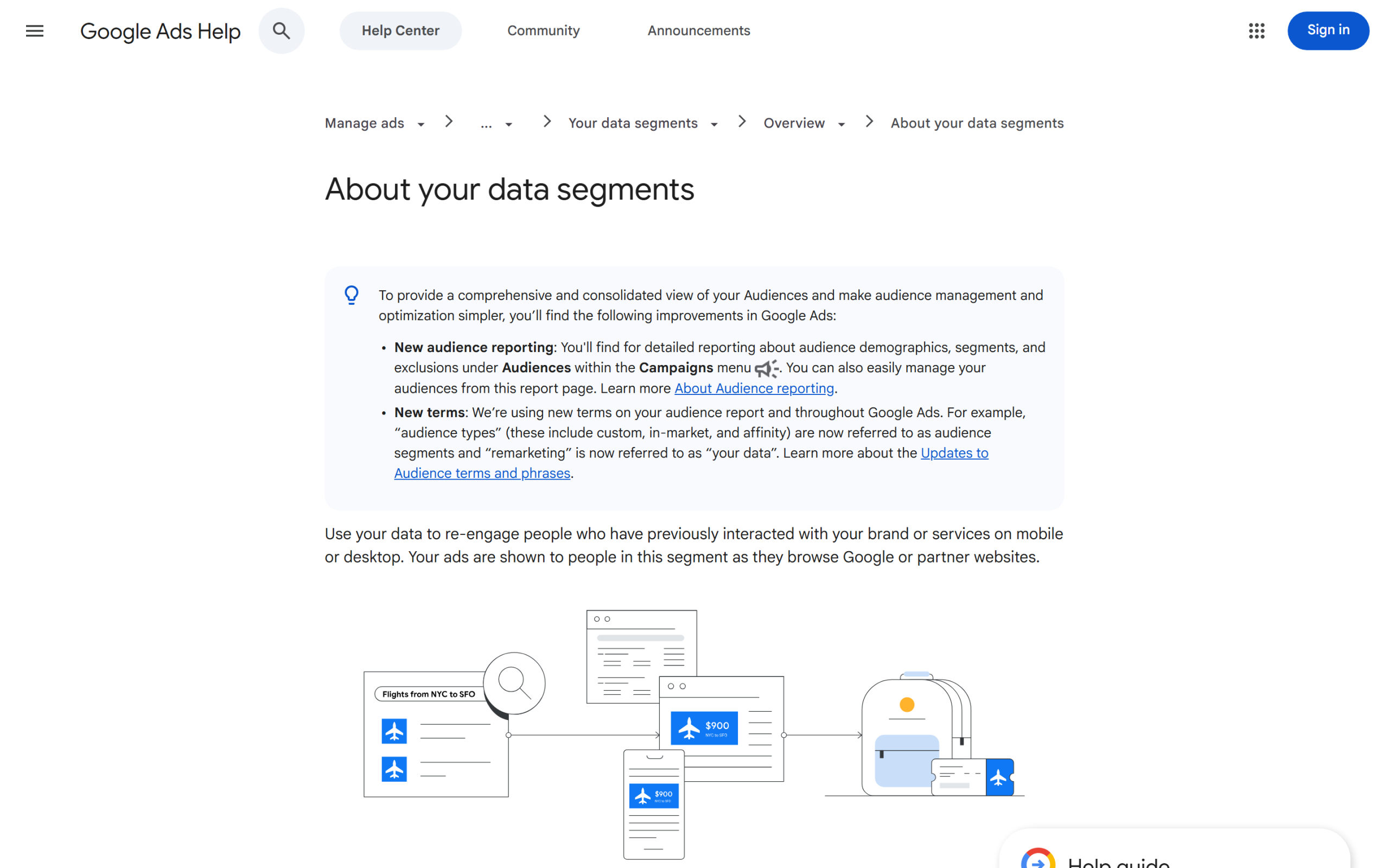
Display ads are banners and images shown on websites and apps. Remarketing shows ads to people who already visited your site, as a reminder to return.
- Suits: Businesses with enough traffic to build an audience of visitors who left without acting.
- How to start: (1) Make sure your site has enough monthly visits to build an audience. (2) Create an audience of people who viewed a key page but did not enquire. (3) Design two simple ads that repeat one offer. (4) Cap how often one person sees the ad.
- Cost: Set by budget, and charged by impressions or clicks.
- Tools: Google Ads display and remarketing campaigns, and the audience tools in Meta Ads Manager.
- Measure: Return visits, conversions and cost per acquisition.
Affiliate and influencer marketing
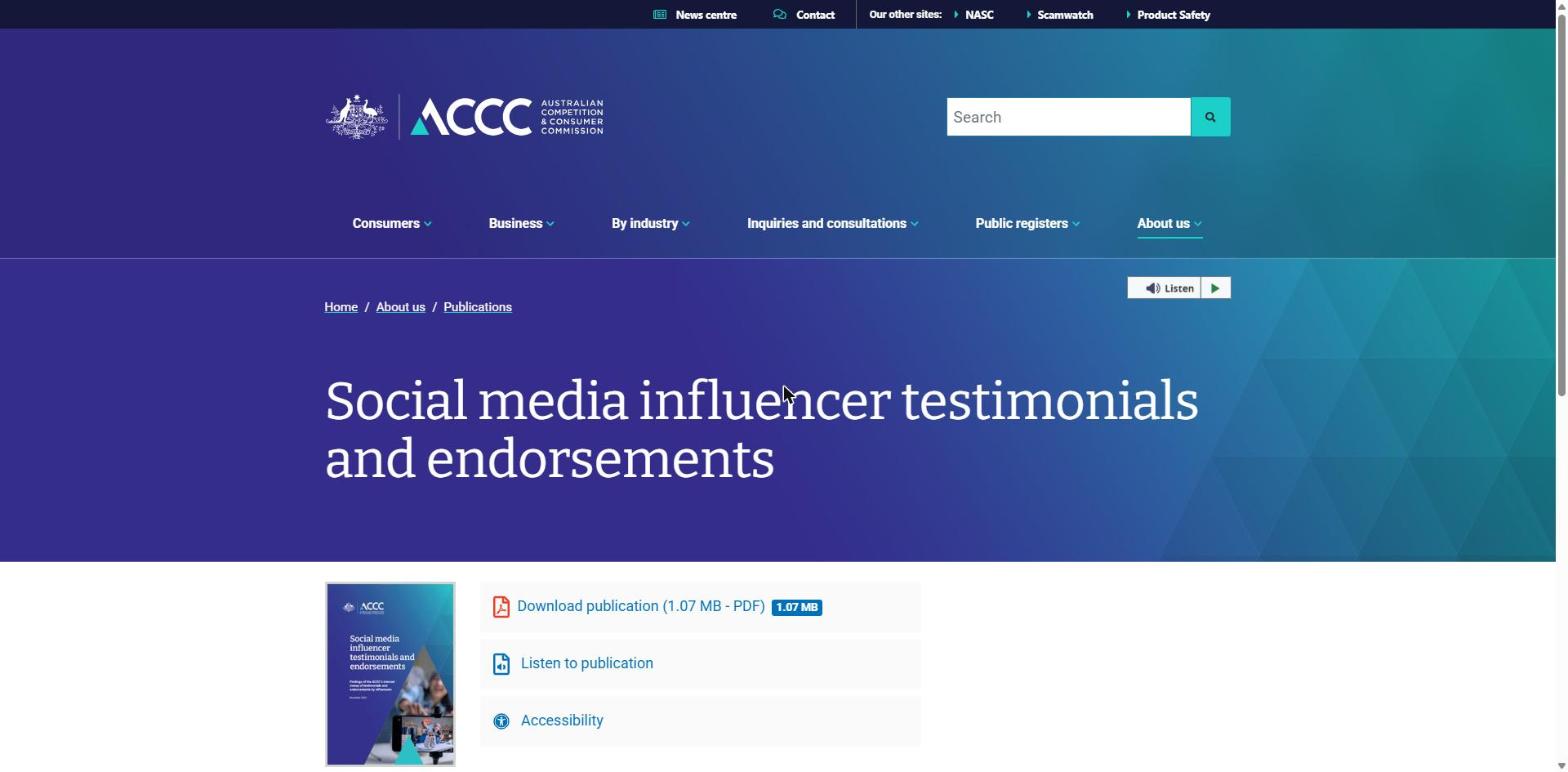
Affiliate marketing pays partners a commission for the sales or leads they send you. Influencer marketing pays creators or gives them gifts to feature your product to their audience.
- Suits: Businesses whose partner or creator audience matches their own and where each partner can have a trackable link or code.
- How to start: (1) Choose partners whose audience matches your customers. (2) Give each partner a unique link with UTM tags or a code. (3) Agree on the terms in writing, including how and when you pay. (4) Ask creators to label paid posts clearly.
- Cost: A commission on each sale or lead, a fixed fee for a post, or free products given as payment.
- Tools: A link or code for each partner, an affiliate network if you want to scale, and Google Analytics 4 to compare partners.
- Measure: Sales or leads per partner, and cost per acquisition.
Marketing automation
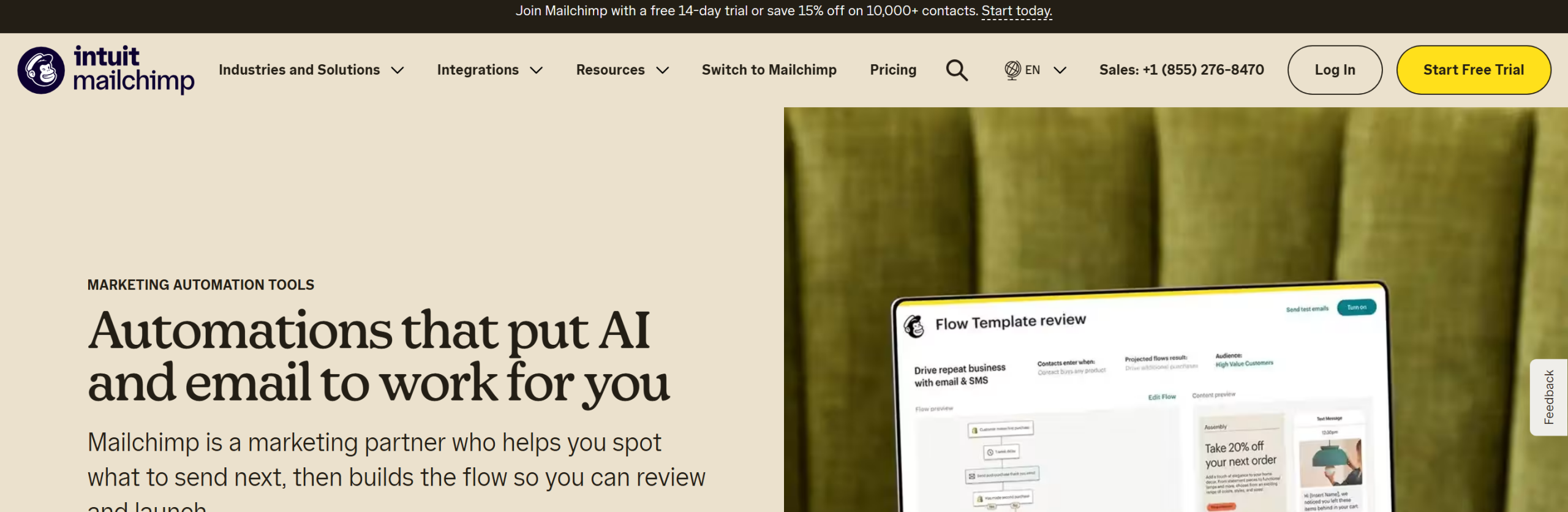
Marketing automation uses software to respond to customer actions, such as sending a welcome email after sign-up.
- Suits: Businesses with repetitive follow-ups that staff forget or send late.
- How to start: (1) Map one routine, such as new enquiry to quote to review request. (2) Write the messages for each step in plain language. (3) Set the trigger and the delay between messages. (4) Test the sequence with your own email before you switch it on.
- Cost: Usually a monthly subscription that rises with the number of contacts, plus the time to set it up.
- Tools: The automation features in your email service, a customer management tool such as HubSpot, or a connector such as Zapier.
- Measure: Replies, bookings and the revenue from automated sends.
Which channels to start with
Start with the channel that fits your goal, your customers’ behaviour and your team’s available time.
| Channel | Best goal | Effort | How soon signals appear | Main measure |
|---|---|---|---|---|
| SEO | Steady enquiries from search | High and ongoing | Slow | Organic enquiries |
| Content marketing | Trust before buying | High | Slow | Engaged visits to key pages |
| Social media | Awareness and community | Medium and ongoing | Moderate | Visits and enquiries from social |
| Paid search | Enquiries from people searching now | Medium | Fast | Cost per acquisition |
| Paid social | Reaching new people | Medium | Fast | Cost per lead |
| Email and SMS | Repeat business | Low to medium | Fast once a list exists | Sales or bookings per send |
| Display and remarketing | Bringing visitors back | Low to medium | Moderate | Return visits and conversions |
| Affiliate and influencer | Reach through partners | Medium | Moderate | Sales or leads per partner |
| Marketing automation | Saving follow-up time | Medium to set up | Moderate | Replies and revenue per sequence |
The time it takes to see results varies by business and budget; these are general patterns. Use three rules to weigh your goal, customer habits and available time:
- Match the goal first: Pick the channel that serves one stated goal, not the one that is popular.
- Go where customers already look: If they search, start with search. If they scroll, start with social.
- Choose what you can sustain: Paid channels give faster signals but stop when the budget stops. SEO and content are slower and keep working.
For the wider plan behind these choices, see our marketing strategy guide.
A simple scoring method
A scoring table helps you compare channels against the same criteria for your business.
Score each channel from 1 to 5 on five questions, where 5 is the best answer for your business:
- Customers: Are your customers there? 5 means most of them use it.
- Capability: Can your team do it well? 5 means you have the skills and time.
- Cost: Is it affordable? 5 means the cost is low for you.
- Speed: How soon will you see signals? 5 means within weeks.
- Measurable: Can you count the result? 5 means every enquiry can be tracked.
Add the five scores for a total out of 25. The scores below are a hypothetical example, not data:
| Channel | Customers | Capability | Cost | Speed | Measurable | Total |
|---|---|---|---|---|---|---|
| Local SEO and Business Profile | 5 | 4 | 5 | 3 | 4 | 21 |
| Paid search | 5 | 3 | 3 | 5 | 5 | 21 |
| Organic social | 4 | 4 | 5 | 3 | 2 | 18 |
| 2 | 3 | 5 | 3 | 5 | 18 | |
| Paid social | 3 | 3 | 3 | 4 | 4 | 17 |
| Display and remarketing | 2 | 2 | 3 | 3 | 4 | 14 |
Local SEO with the Business Profile and paid search tie at the top with 21 each, so the owner starts with those two. Organic social and email tie on 18 and wait for a later cycle.
How to measure digital marketing
Four numbers tell an owner most of what they need: traffic, conversion rate, cost per acquisition and return on ad spend.
The four numbers to track
Each number has a simple formula, and the figures below are a hypothetical month for the Geelong landscaper, not real results.
The business spent AUD $400 on paid search, which produced 160 clicks and 8 quote requests. Across all sources, the site had 400 visits and 14 quote requests. One of the quotes became a job worth AUD $3,000.
| Number | Formula | Worked example |
|---|---|---|
| Traffic | Visits to your site, split by source | 400 visits in the month |
| Conversion rate | Actions divided by visits, times 100 | 14 requests / 400 visits = 3.5% |
| Cost per acquisition (CPA) | Spend divided by leads or customers | $400 / 8 requests = $50 |
| Return on ad spend (ROAS) | Revenue from ads divided by ad cost | $3,000 / $400 = 7.5 |
Cost per click follows the same pattern: $400 divided by 160 clicks is $2.50. For paid search alone, the conversion rate is 8 requests divided by 160 clicks, or 5%.
Read the four measures together: High traffic with a low conversion rate points to a page problem. ROAS of 7.5 means each dollar of ad spend returned $7.50 in revenue, not profit. With one job in the month, the sample is too small to trust.
Tracking campaigns with UTM tags
UTM tags are short labels added to a link so Google Analytics 4 can report where each visit came from.
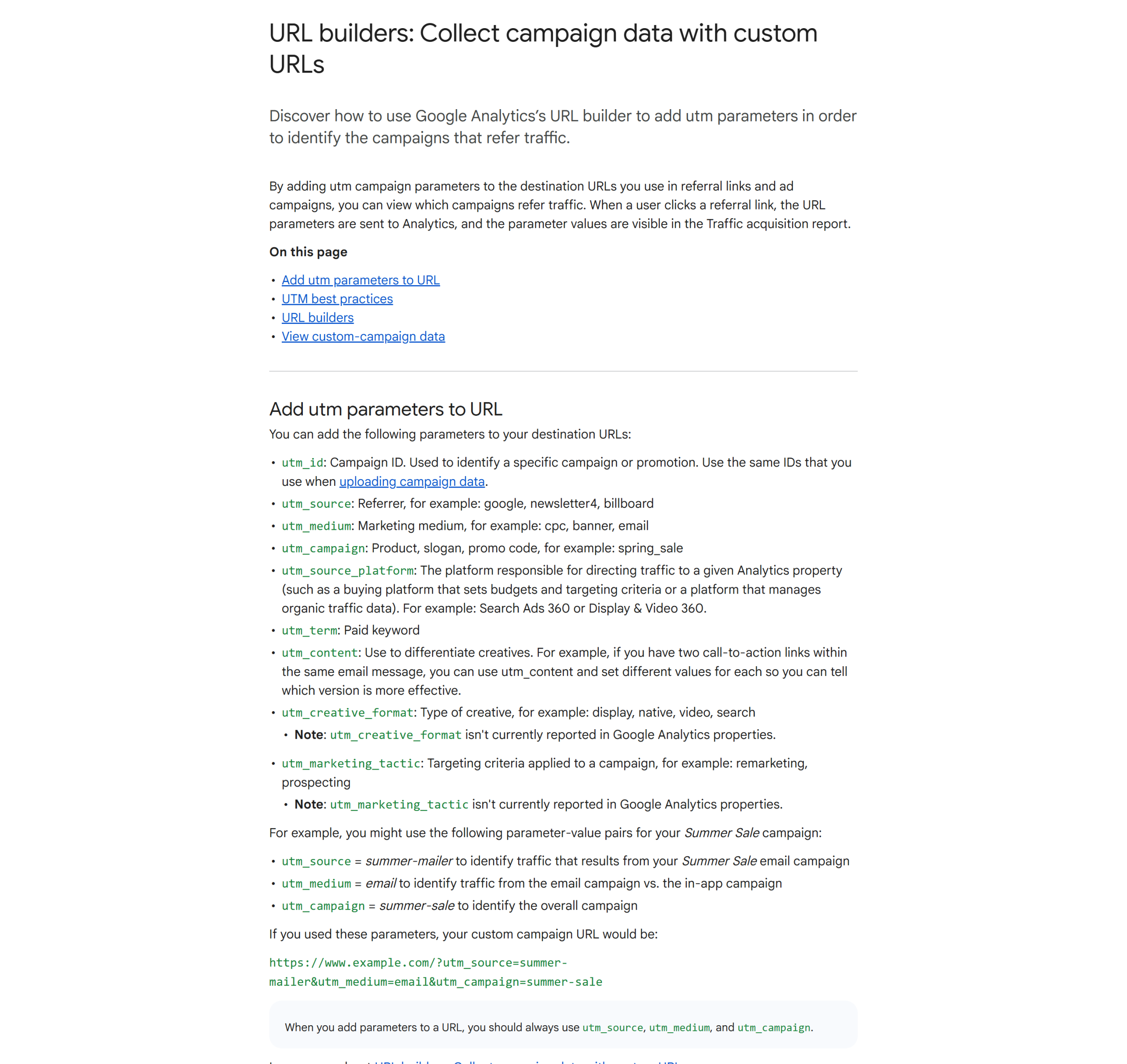
The three most useful tags are utm_source for the link’s location, utm_medium for the channel type and utm_campaign for the campaign name. Google's URL builders help page explains the parameters and lists others.
https://yourbusiness.com.au/garden-redesign?utm_source=google&utm_medium=cpc&utm_campaign=garden-redesign-geelong-2026-12The address above is a placeholder. Values are case sensitive, so agree on one naming pattern and keep to it:
| Channel | utm_source | utm_medium | utm_campaign |
|---|---|---|---|
| Google Ads | cpc | garden-redesign-geelong-2026-12 | |
| Newsletter | newsletter | spring-quote-offer-2026-12 | |
| Facebook post | social | garden-redesign-geelong-2026-12 | |
| Letterbox flyer with QR code | letterbox | qr | geelong-flyer-2026-12 |
Four habits keep the data clean: Use lowercase only and hyphens instead of spaces. Name campaigns by topic, place and month, and record every link you create in a shared sheet. Do not add UTM tags to links between pages of your own site.
A customer may see an ad, search later and buy after an email. Each tool may credit a different step, which limits how reliably you can attribute results. Treat the numbers as a guide to direction, not exact proof.
Free tools that show the numbers
Four free tools cover most of what a small business needs to see.
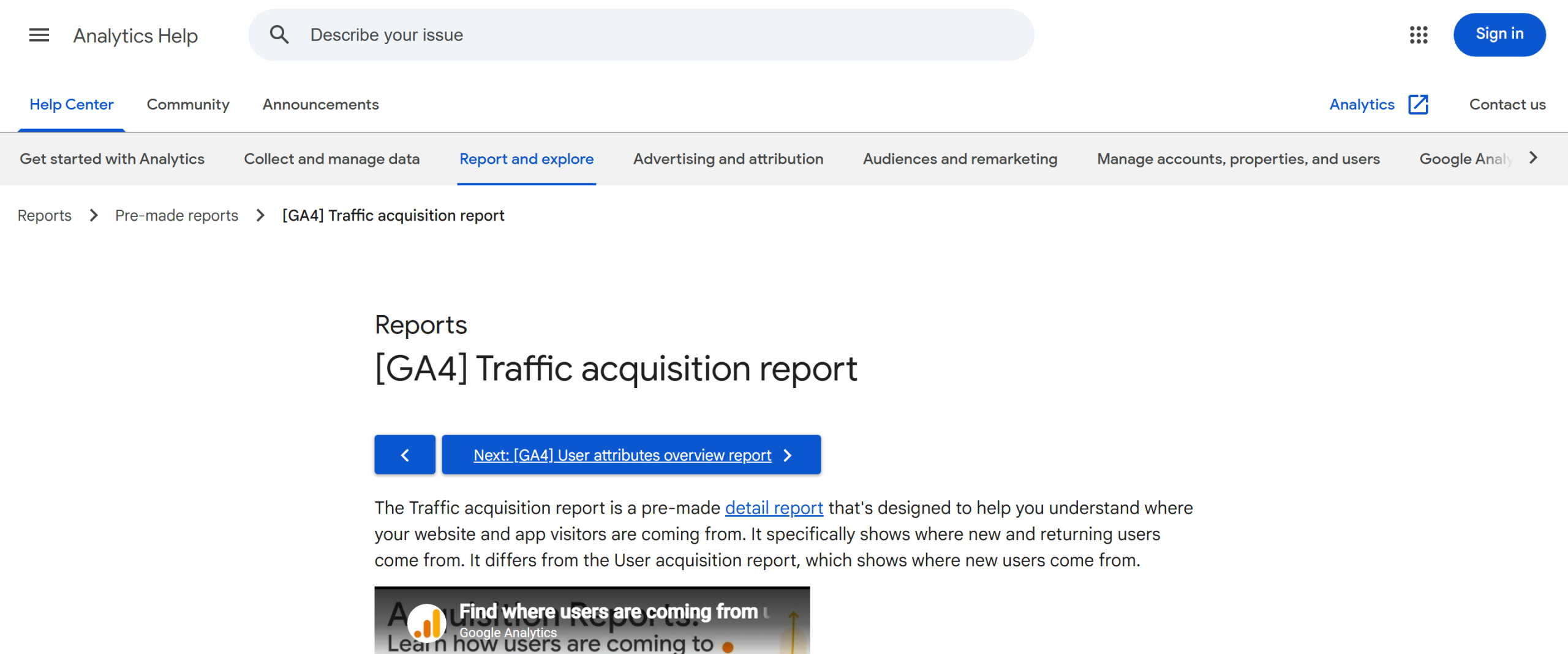
- Google Analytics 4: Google Analytics shows how people reach and use your site. Check the traffic by source report weekly.
- Google Search Console: It shows which searches bring your site up in Google, how often people click and which pages have problems.
- Google Business Profile: The performance view shows how people found and contacted your listing. Use it for local search, calls and direction requests.
- Meta Business Suite: Its insights show the reach and engagement of Facebook and Instagram posts and ads. Compare them with visits from social in Google Analytics 4.
Put the numbers from all four in one monthly sheet with five rows: spend, visits, enquiries, cost per enquiry and jobs won.
How to start with digital marketing
Start with four stages and keep the test small enough to limit the risk.
This is a hypothetical example, not a real client. A four-person landscaping business in Geelong wants more garden redesign enquiries. No results are claimed, and every figure below is an assumption.
Stage 1: Set one goal
Choose one result the business needs, such as more quote requests, and write it so it can be checked.
- Name the action: Quote requests for garden redesigns, not "more business".
- Set a number: Check the current figure first. In the example, the business receives 12 requests a quarter, and the goal is 30.
- Fix the time frame: Ninety days, from 1 December 2026 to 28 February 2027.
- Write it as one sentence: "Raise garden redesign quote requests from 12 to 30 between 1 December 2026 and 28 February 2027."
The goal is specific, measurable and time-bound. Judge it against capacity, and ask whether the team can quote 30 jobs in a quarter.
Stage 2: Fix the base: website and Google Business Profile
Before spending on any channel, check that your website and Google Business Profile make it easy for visitors to act:
- Speed on a phone: Open the page on a mobile on a normal connection. If it takes more than a few seconds to show the offer, ask your developer to compress images and remove unused scripts.
- A clear offer: The page says what you do, where and for whom in the first screen.
- One easy form: Ask for the name, suburb and phone number only, and show a confirmation message.
- Google Analytics 4: Install it and mark form submissions and phone taps as key events.
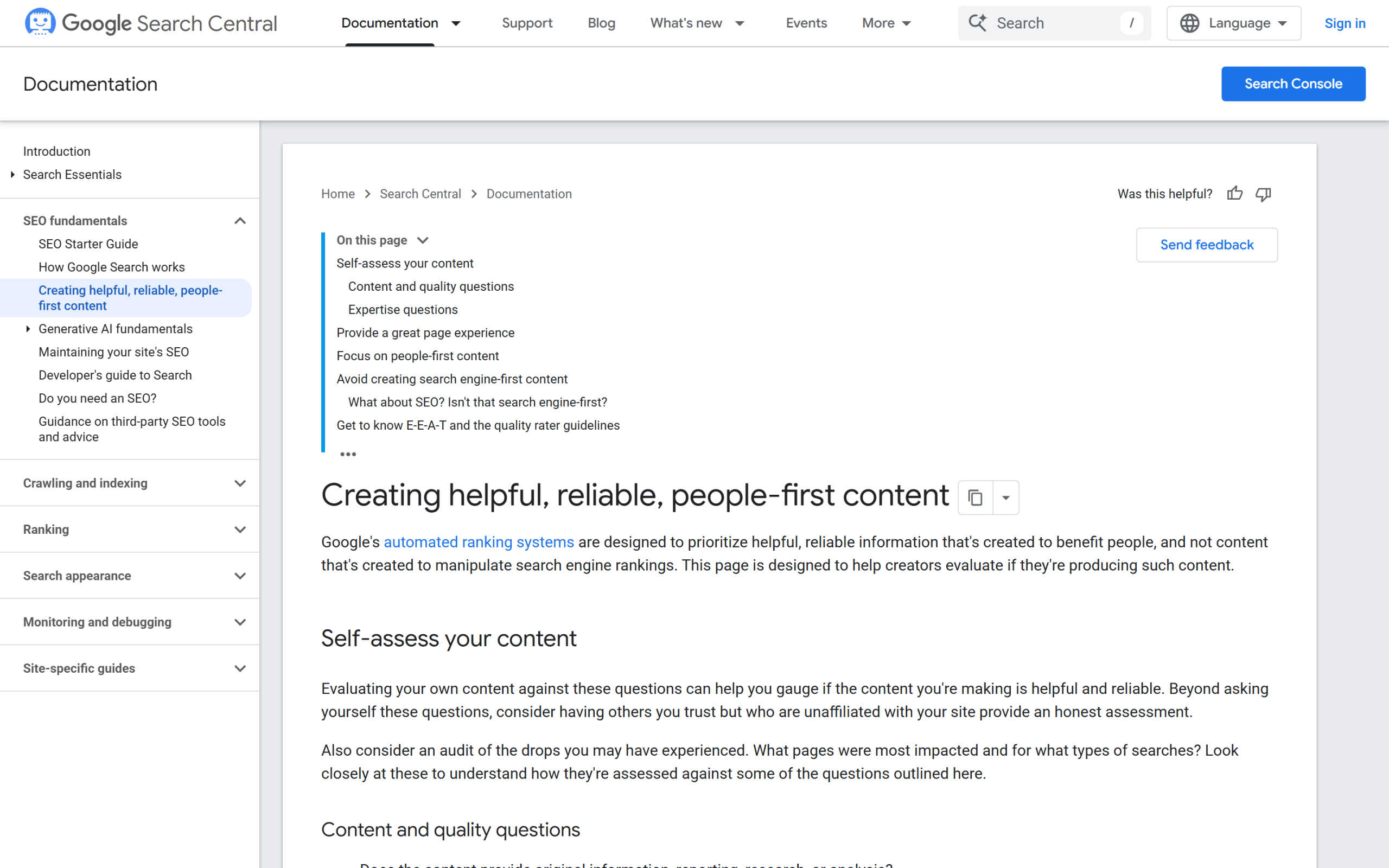
- Google Search Console: Add and verify the site.
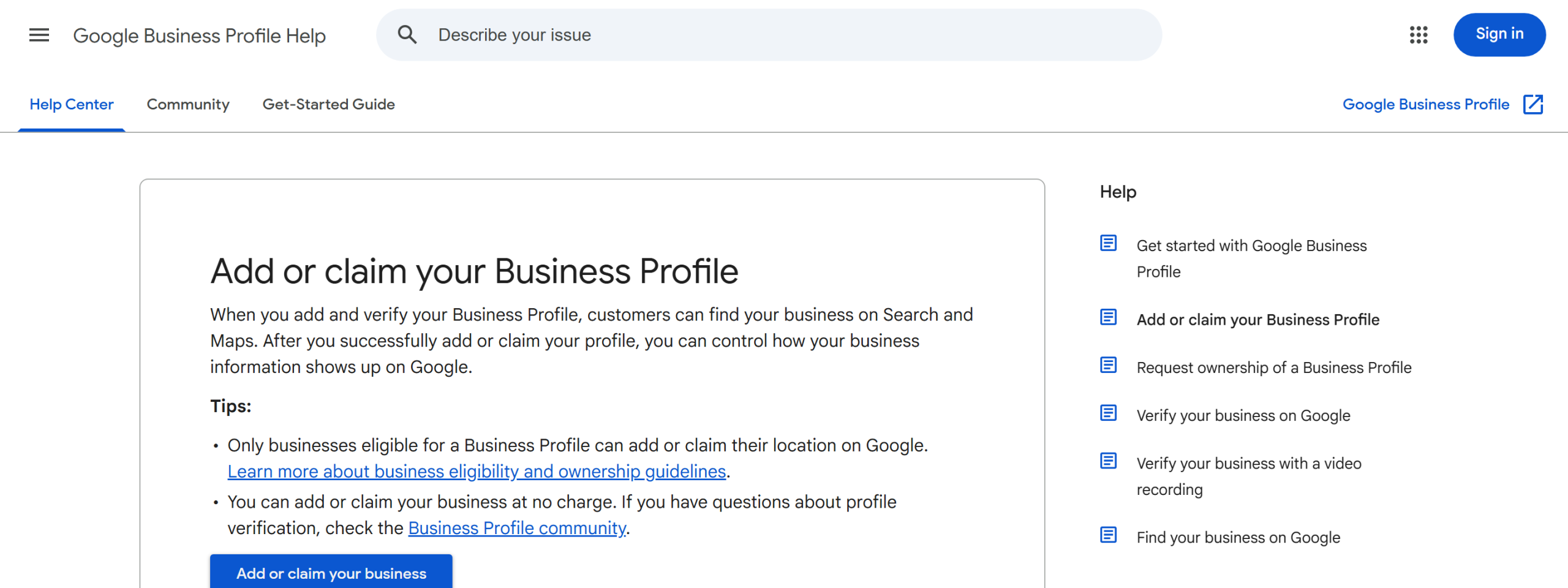
- Google Business Profile: Google lets you add or claim your Business Profile. Fill in the services, service area, hours and photos, and ask recent customers for reviews.
If the site is slow, hard to use or does not show the offer, fix that first. Our Websites services build and improve sites. The Website Rescue package covers sites that need repair and redesign.
In the example, the owner adds a garden redesign page with a short quote form and checks it on two phones.
Stage 3: Pick one or two channels and a test budget
Choose channels using the scoring table, then set a budget the business can afford to lose.
In the example, local SEO with the Business Profile and paid search score highest at 21 each, so those are the two channels. The owner improves the redesign page and profile for search, then runs a small paid search test. Customers search when they are ready to hire.
How to set a test budget
Work backwards from the goal using this formula: Budget = target leads x target cost per lead.
- Find the leads you need from paid: The goal is 30 requests in the quarter, and 12 already arrive without paid spend. The test must add 18.
- Set a target cost per lead: The owner assumes AUD $60. This is an assumption, not a market figure.
- Calculate the budget: 18 leads x $60 = $1,080.
- Sense-check against the value of a job: If one in six quote requests becomes a $3,000 job, each request is worth about $500 ($3,000 / 6). A $60 cost per request is well inside the margin. Both figures are assumptions.
- Fix the stop date: 28 February 2027, with a review each month.
Spread the budget over the 90 days so you learn before you commit all of it:
| Days | Focus | Spend (AUD) | Check |
|---|---|---|---|
| 1 to 14 | Fix the page, set up tracking, complete the Business Profile | $0 | Form and call tracking work |
| 15 to 30 | Launch paid search for one service in the Geelong area | $300 | Clicks reach the page, requests arrive |
| 31 to 60 | Cut weak keywords, improve the ads and the page | $400 | Cost per request moves toward $60 |
| 61 to 90 | Scale what works, stop what does not | $380 | Total requests on track for 30 |
| Total | All stages | $1,080 | Goal reviewed |
The total spend matches the formula: $300 + $400 + $380 = $1,080.

Get the digital marketing starter checklist
Enter your details and we will email the Excel checklist to you.
Stage 4: Review after one cycle
Run the test for the full cycle, then review it against the goal.
If your team lacks time, Enosta Digital Studio can manage search, social and creative under one plan. Review the test using four questions:
- Goal: Did quote requests move toward 30?
- Source: Which channel produced enquiries, and at what cost?
- Behaviour: What did visitors do after they arrived?
- Next step: What will you stop, keep or test next?
The thresholds below are assumptions based on the $60 target:
| Result | Decision | Action |
|---|---|---|
| Cost per request at or below $60, and leads on track | Keep | Hold the budget steady, and test a second channel from the scoring table |
| Cost per request above $60 and up to $90 | Fix | Change the page, ads or keywords, then run another 30 days |
| Cost per request above $90, or requests far below target | Stop | Pause the channel and move the budget to another one |
The $90 limit is 1.5 times the $60 target ($60 x 1.5 = $90). Write the thresholds before the test starts.
Rules to know in Australia
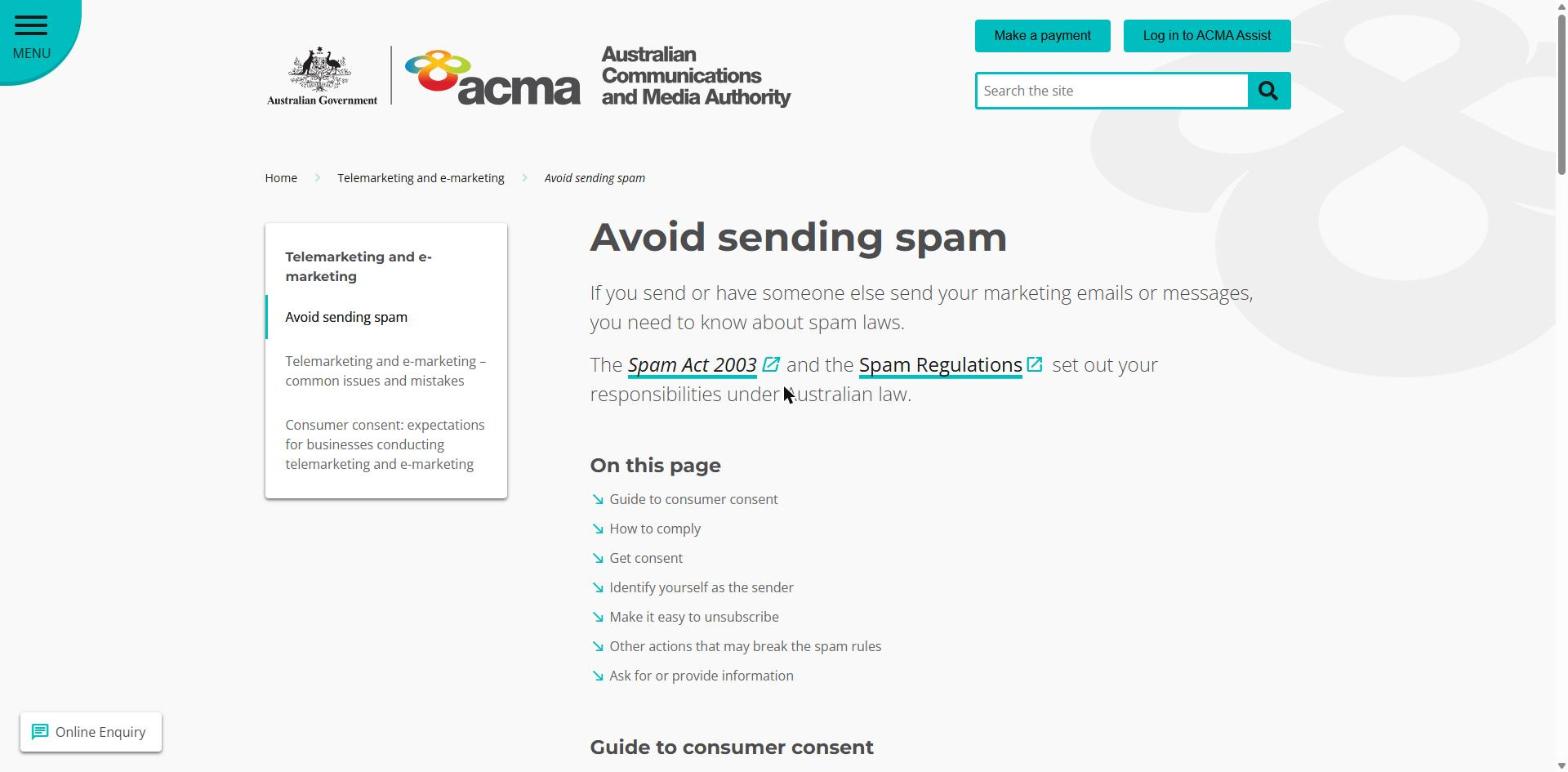
Australian businesses that email or text customers must follow the Spam Act 2003, and the ACMA publishes the rules.
The ACMA's guidance on avoiding spam sets three requirements for marketing messages:
- Consent: You need consent before you send, and you must be able to prove it. You cannot send a message to ask for consent.
- Identify the sender: Give your accurate business name and contact details, which must stay correct for at least 30 days.
- Unsubscribe: Include a clear way to opt out that is free, is honoured within 5 working days and works for at least 30 days.
Buying a list does not remove your duty to hold consent. The Privacy Act 1988 also covers how organisations handle personal information. The OAIC says it applies to organisations with an annual turnover of more than AUD $3 million and some others.
This is general information, not legal advice.
Checklist before you send email or SMS
Check consent, sender details and unsubscribe options before each send to keep your campaign within the rules.
- Consent: Confirm that each person on the list agreed, and that you hold a record of who agreed, when and how. Express consent, such as a ticked box on a form, is best practice.
- No consent by message: Do not send an email or text just to ask for consent, because the ACMA treats that as a marketing message.
- Bought lists: Check consent for every address, because you remain responsible for it. Do not use lists made with address-harvesting software.
- Sender details: Show your correct legal or business name, or your name and ABN, and correct contact details. If a provider sends for you, the message must still identify your business.
- Unsubscribe: Give clear instructions, honour each request within 5 working days, charge no fee and ask for no login or extra personal information.
- SMS: A message with an alphanumeric sender name usually cannot receive replies, so include another way to opt out, such as a number or a link.
Benefits and limits
Digital marketing offers reach and measurement, but each benefit has limits that shape what you can expect.
- Reach: You can be found by people well beyond your local area. Reaching people does not mean they want your service, so many visitors may not buy. Reduce the risk by aiming at a clear audience and service area.
- Targeting: Ads and content can be aimed by search term, location or interest. Narrow targeting can miss good customers. Test a wider audience once a quarter and compare the results.
- Measurement: You can see which channel produced each visit and enquiry. Tools can disagree on which channel earned a sale. Use one agreed measurement tool, such as Google Analytics 4, and compare it with your own enquiry log.
- Flexible spend: You can start small, pause and move budget between channels. Small tests produce small samples. Run a test long enough to cover a full cycle before you decide.
Three limits apply to every channel:
- Constant change: Platforms and search features change, so review the plan every quarter.
- Competition: Other businesses compete for the same attention, so a generic message gets lost. Say who you serve.
- Ongoing effort: Most channels need steady work, not a one-off push. Plan the hours as well as the budget.
Frequently asked questions
How long does digital marketing take to work?
Paid channels such as search ads can show early signals soon after a campaign starts. SEO and content take longer, and Google's SEO guide says changes can take hours or several months to show. Judge results over a full test cycle, not a single week.
How much should a small business spend on digital marketing?
No single figure fits every business. Start with an amount you can afford to lose, spread it across no more than two channels and set a review date. Raise spend only on a channel whose cost per acquisition suits your margins.
Can we do digital marketing in-house?
An owner can handle the basics: Set up a Google Business Profile and Google Analytics, build an email list and post regularly. Outside help makes sense when a channel needs specialist skills, such as paid search setup or technical SEO, or when nobody has the time.
Is digital marketing different for B2B businesses?
The channels are the same, but the mix differs. B2B buyers usually research before they contact you, so search, helpful content, email and professional networks such as LinkedIn tend to carry more weight. B2C businesses often lean on social media, reviews and offers.